


Air-Cooled vs Water-Cooled Chiller: Which One Should You Choose?
A practical comparison of air-cooled and water-cooled chillers: efficiency, installation, water use, maintenance and the applications each one suits best.
Evanso Engineering Team
11/28/20263 min read
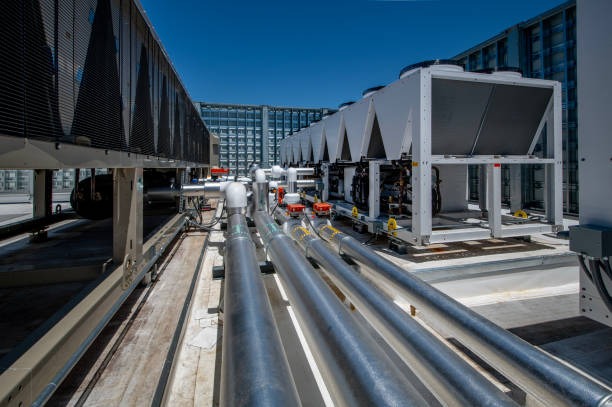

Two ways to reject heat
Every chiller removes heat from water or glycol and rejects it through a condenser. The main difference between chiller types is how that condenser is cooled: by ambient air with fans, or by water that is cooled again in a cooling tower.
Air-cooled chillers
Air-cooled chillers are installed outdoors and use fans to cool the condenser. They do not need a cooling tower, condenser water pumps or water treatment, which keeps the system simple.
Lower initial investment and simpler installation
No water consumption for heat rejection
Well suited to small and medium capacities and sites with limited water
Efficiency drops as outdoor temperature rises
Water-cooled chillers
Water-cooled chillers reject heat to a condenser water loop connected to a cooling tower. Because water carries heat more effectively than air and the cooling tower works close to the wet-bulb temperature, condensing temperatures are lower.
Higher energy efficiency, especially at large capacities
Compact indoor installation and lower noise
Requires a cooling tower, pumps and water treatment
Water consumption due to evaporation in the tower
Which one is right for you?
For small and medium projects, hot and dry locations with limited water, or sites where a simple installation is important, an air-cooled chiller is usually the practical choice. For large plants running many hours per year, a water-cooled system often pays back its higher initial cost through lower energy bills.
The right answer depends on capacity, operating hours, local climate, water availability and space. Share these details with us and we will compare both options for your project.
Contact